Inside Droplox: How the Site, the Plans, and the Fees Actually Work (Part 2)
A screen-by-screen walkthrough of Droplox: the model, the plans, the per-category fees, the risk controls, and the catches.
This is Part 2. In Part 1 I gave my overall impression of the Droplox (droplox.com) closed beta. Here I want to slow down and walk through the platform itself, section by section, so you can see how a sale actually happens, what the plans cost, and where the fees and the catches sit. Same disclosure as before: I was a beta tester and I'm exploring working with the team, so read this as a first-hand walkthrough, not an independent audit.
Retailer of record: the whole idea in one line
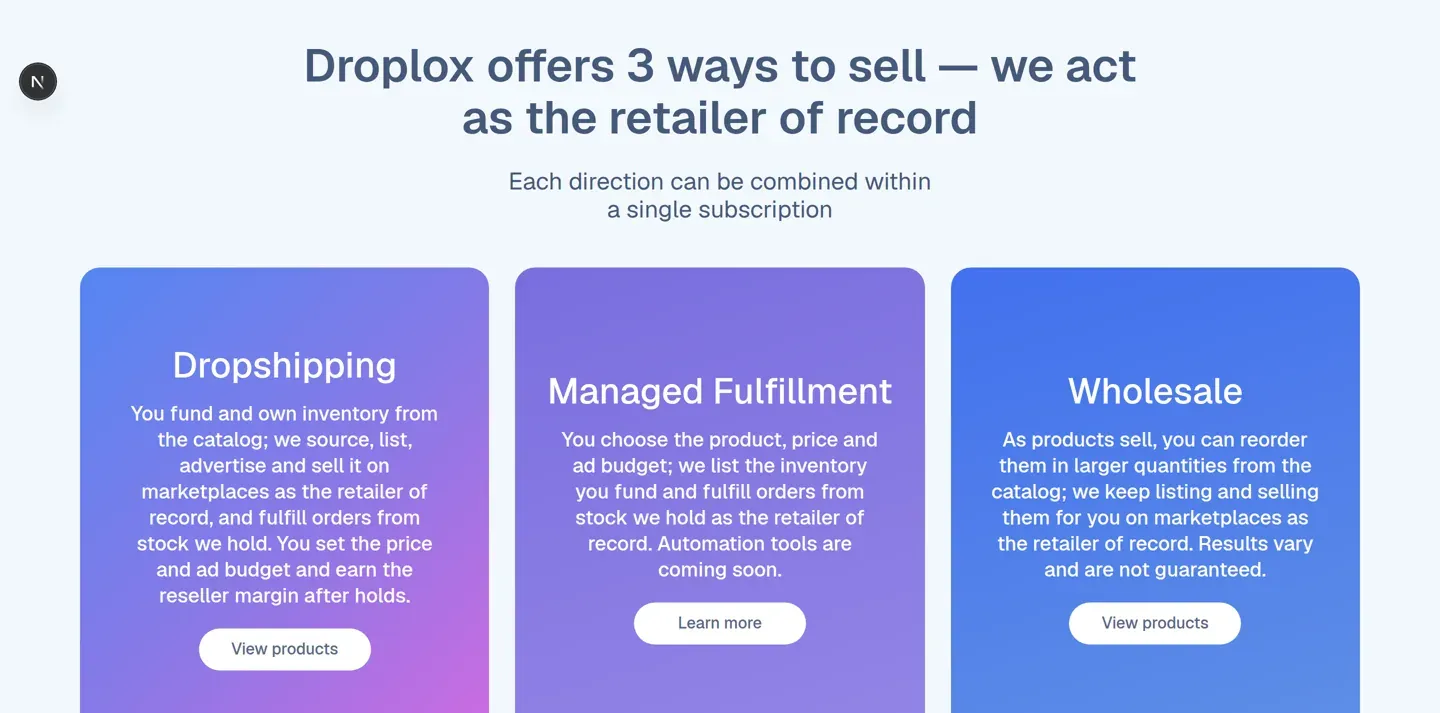
Everything about Droplox comes back to one phrase you'll see across the site: it acts as the retailer of record. You fund and own the goods; Droplox lists them, sells them, ships them, and deals with the buyer. Under a single subscription there are three lanes to do that: plain Dropshipping, Managed Fulfillment, and Wholesale. You pick the lane, the operational side stays on their end.
How a sale actually happens
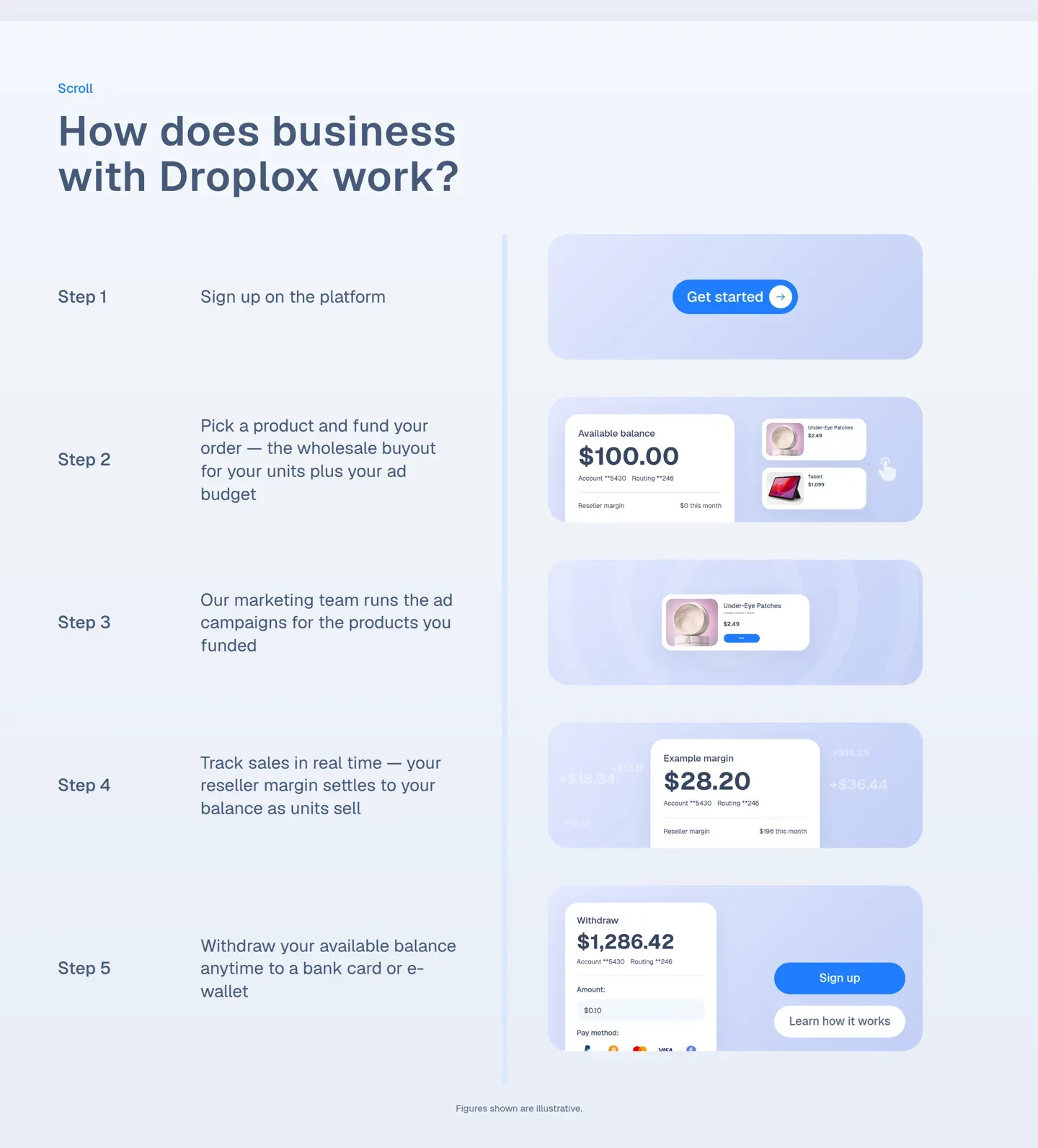
This is the part I most wanted to understand, and the site lays it out in five steps. You sign up, then you pick a product and fund the order, which is the buyout for your units plus the ad budget you want behind them. Their marketing team runs the campaigns for the products you funded. As units sell, your reseller margin settles onto your balance, and you withdraw what's available to a card or e-wallet whenever you want. The little numbers in that panel ($100 funded, $28.20 building, $1,286.42 available) are illustrative, but the flow is exactly how it felt to use.
What "your margin" looks like
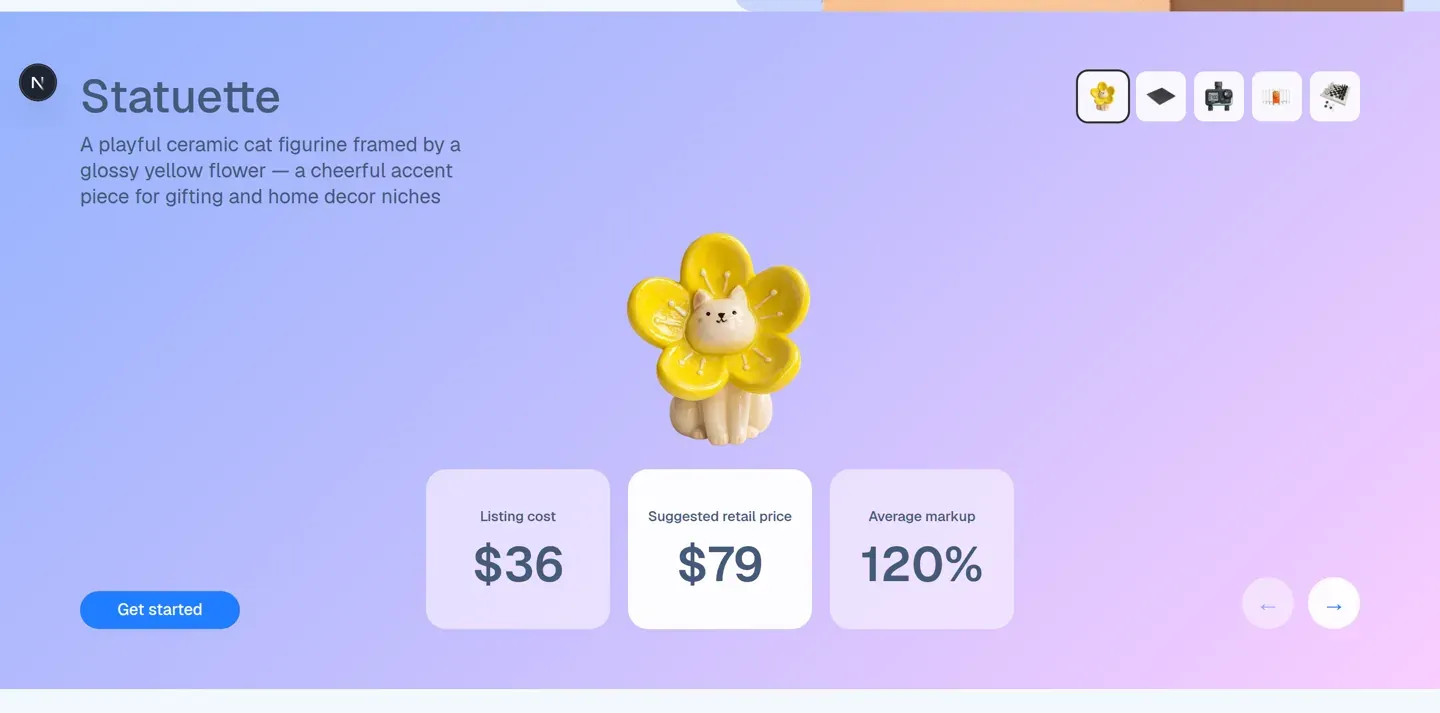
The site uses small product examples to show the math, and I appreciate that they're modest rather than screenshots of supercars. The ceramic statuette is typical: listing paid $36, suggested retail $79, average markup around 120%. Elsewhere they quote typical margins of 15–30% depending on the product. Read the fine print they include themselves, though: it's a projected margin model, not a promise of results, and the goods you fund are yours. This is a reselling business, not an investment, and to their credit the site says exactly that.
The plans
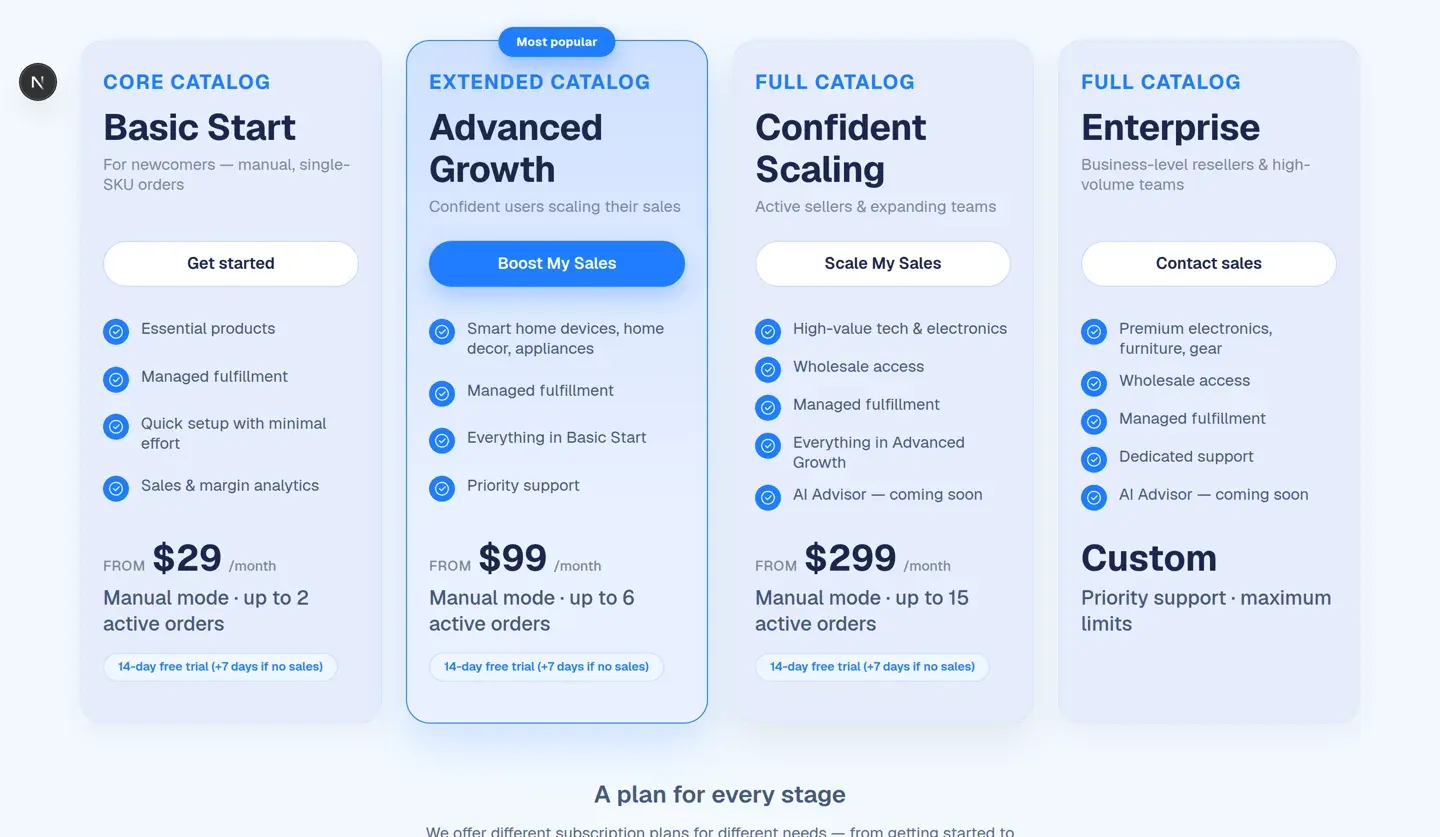
There are four plans: Basic Start at $29, Advanced Growth at $99 (the one marked most popular), Confident Scaling at $299, and Enterprise on a custom quote. Every plan runs in manual mode right now. The feature lists look different, but the differences are smaller than the layout suggests, which brings me to the most useful screen on the whole site.
What actually changes between plans
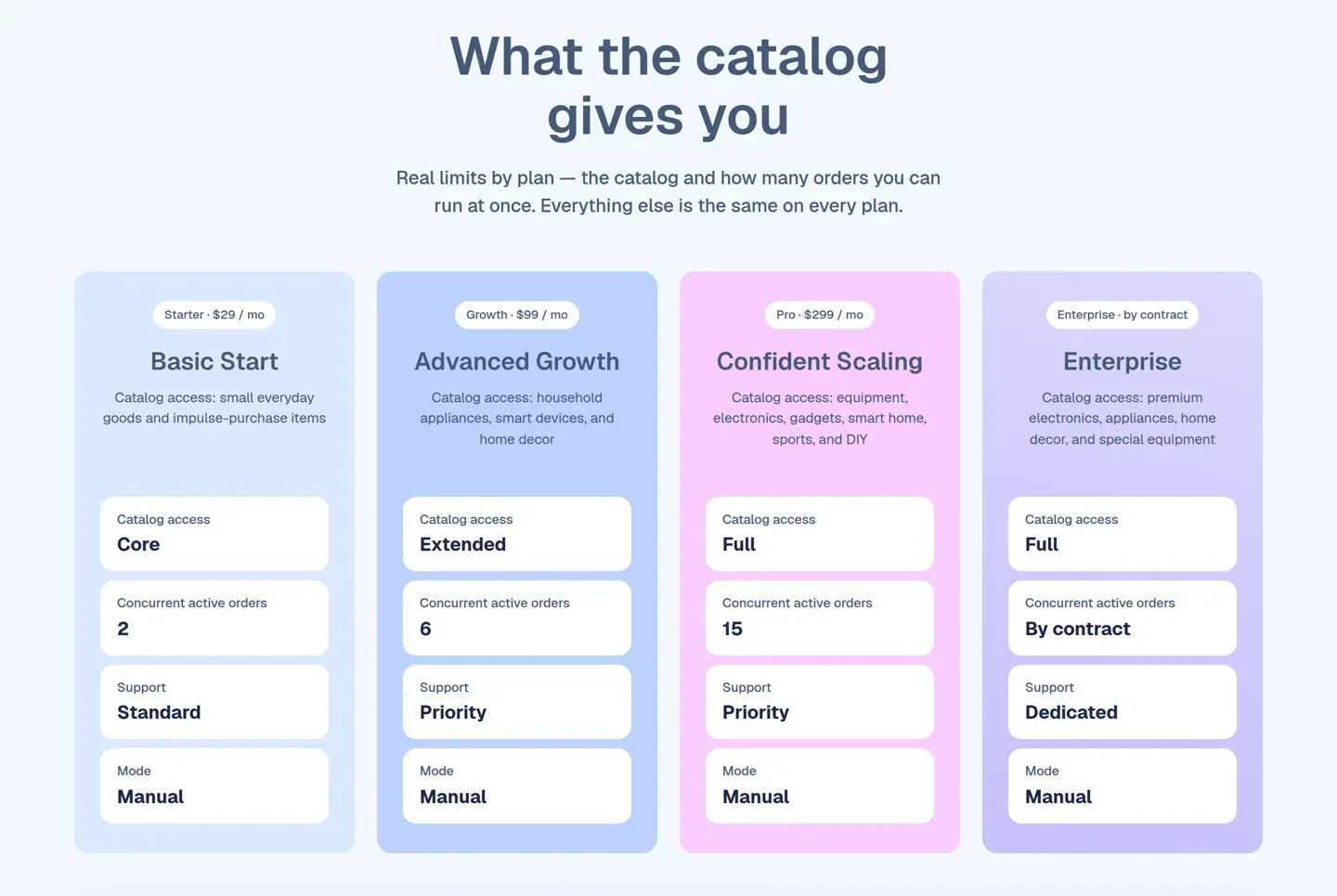
This screen spells out that the real limits by plan are two things: how deep a catalog you can access (Core, Extended, or Full) and how many orders you can run at once (2, 6, 15, or by contract on Enterprise). "Everything else is the same on every plan." So on the $29 tier you're not on some crippled version, you're just capped at 2 concurrent active orders and a smaller catalog. That's an honest way to draw the lines, and it made picking a plan easy.
The fees, all on one table
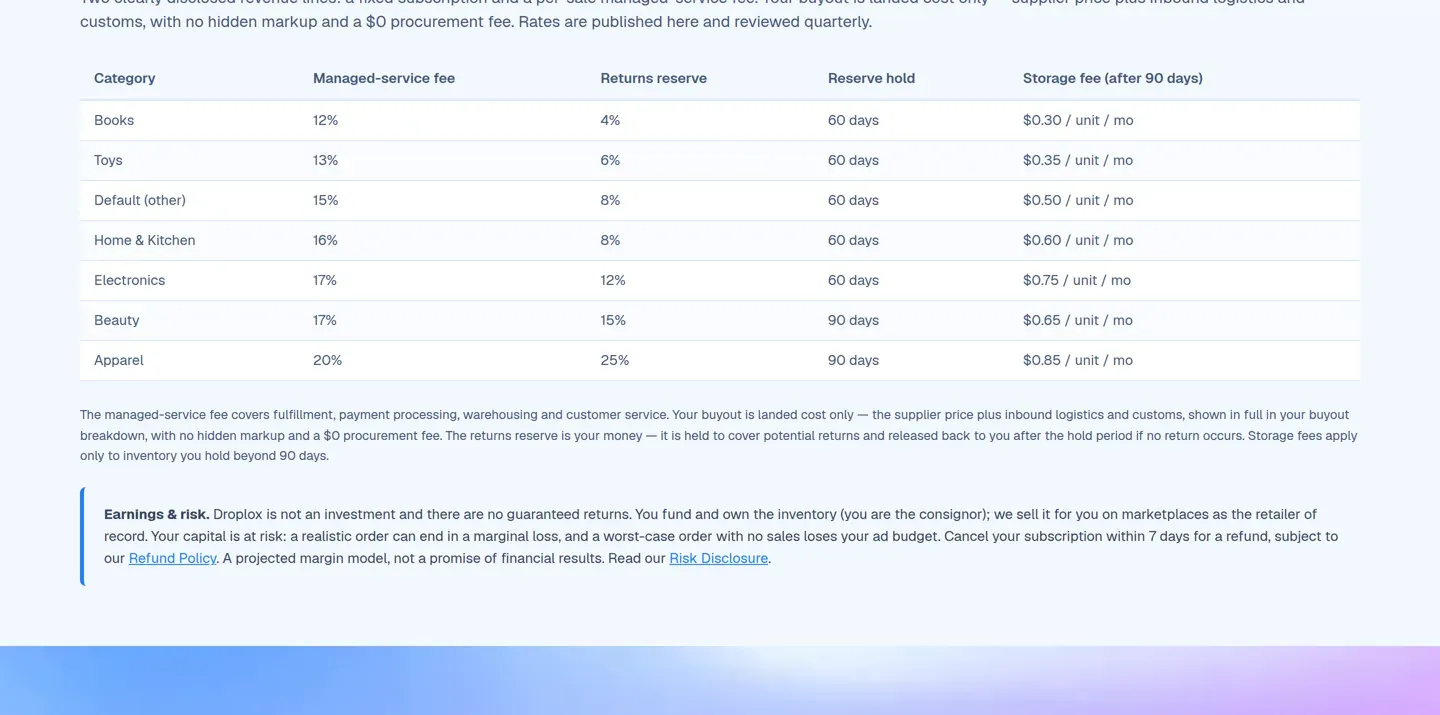
Here's where a lot of platforms get vague and Droplox doesn't. There's a single per-category fee table: a managed-service fee that runs from about 12% on books up to 20% on apparel, plus a returns fee, a reserve held, and a storage fee that only kicks in after 90 days. The buyout itself is landed cost only, with no procurement markup on top. You do have to actually read this table and model your margin against it before you price anything, but I'd rather have it in front of me than buried in a help doc.
The protections, and the one real catch
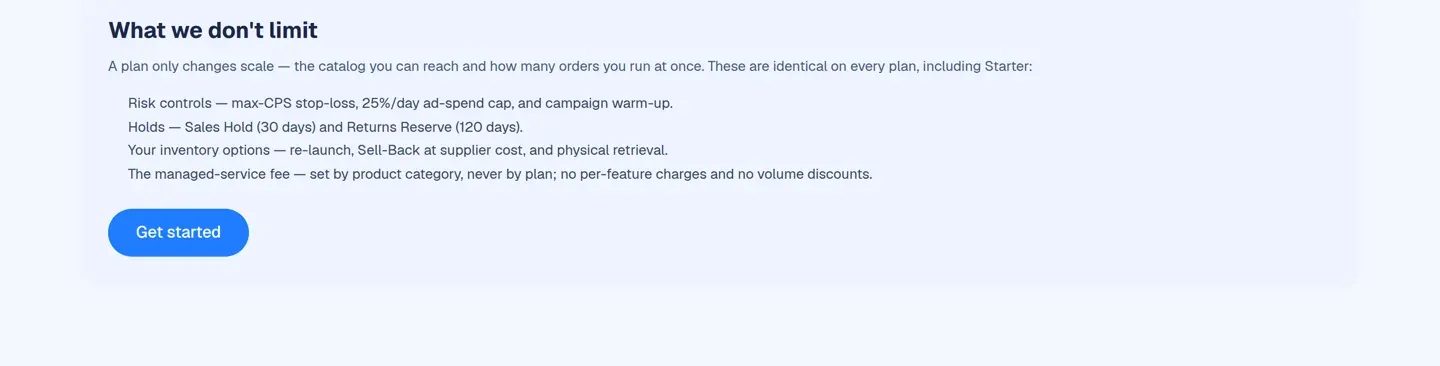
The "what we don't limit" section is what sold me on the risk side. On every plan you get a max cost-per-sale stop-loss, a 25%-per-day cap on ad spend, and a campaign warm-up, so the ad budget can't evaporate in an afternoon. You can also re-launch, sell goods back at supplier price, or physically withdraw them. The catch to plan around sits in the same block: a 30-day sales hold and a 120-day returns reserve. Your money is real, but it isn't instant. Treat it like inventory cash flow, not a wallet.
Catalog and suppliers
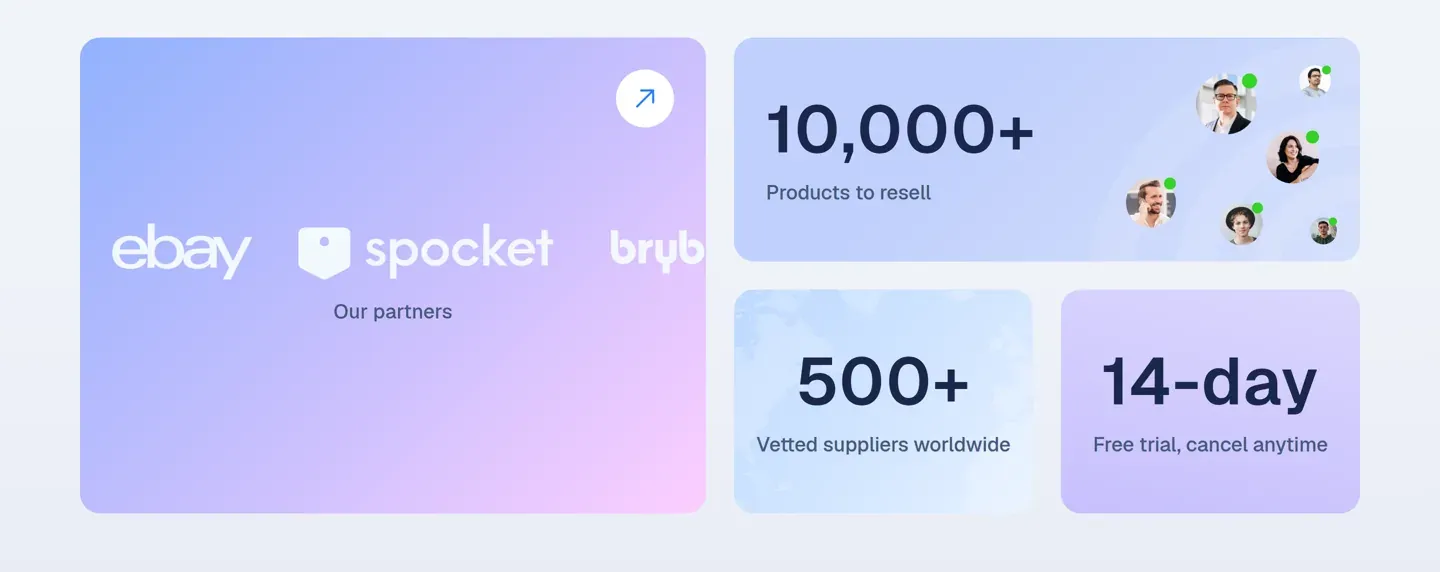
For scale, the site quotes 10,000+ products from 500+ vetted suppliers worldwide, with a 14-day free trial you can cancel anytime. The catalog I saw in beta was smaller than that headline, which is normal for this stage, but the selection felt curated rather than the usual endless dump.
Wrapping up
That's the platform as the site presents it and as it felt to use. The model held up to a close look, the fees and the holds are the parts to go in clear-eyed about, and the rest is the beta being a beta. Publicly the site is still on a "Coming Soon" page, so if this walkthrough made the model click for you, the early-access form there is your way in before launch. The platform is at droplox.com.
Disclosure: I took part in the Droplox closed beta and I'm exploring a working relationship with the team. This is a first-hand walkthrough, not an independent audit.